Lymphatic drainage massage
in Plainview, NY
The lymph system has no pump of its own — it moves only when you do, or when someone moves it for you. Anna works with light, directional strokes toward the nodes, clearing retained fluid instead of pressing into muscle.
Your body drains waste fluid through a second circulation system that has no heart to push it. When it stalls you feel puffy, heavy, and tired. This massage moves it manually — most patients leave feeling noticeably lighter.
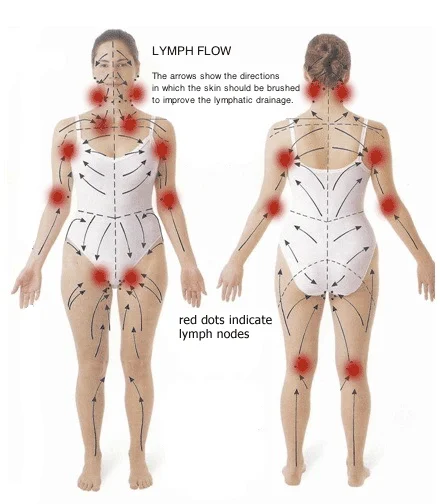
Arrows show the direction the tissue is worked; red points mark the node clusters fluid is drawn toward. Direction is the whole technique — worked the wrong way, drainage does nothing.
What drainage is for.
This is the technique for fluid, not for tight muscle. Where the problem is swelling, heaviness, or sluggish circulation, it does what deep tissue can't.
Post-surgical swelling
Retained fluid after an operation, once your surgeon has cleared you for manual work. Charted session by session.
Inflammation & congestion
Puffy, heavy limbs and inflamed regions where the fluid itself is the source of the pressure and ache.
Sluggish circulation
Patients who sit all day and move little — drainage does manually what the calf pump would have done.
Sports recovery
Clearing metabolic waste between hard sessions, when deep pressure would only add to the load.
Body contour
Less puffy, less congested tissue — cumulative over a series of sessions, not a single visit.
Chronic fatigue
The bone-tired heaviness that deep tissue aggravates. Drainage is the gentler route into the same relief.
It should feel lighter than you expect.
Lymph vessels sit just under the skin, so the stroke is deliberately light and slow. If drainage feels like deep tissue, it's being done wrong — pressure would collapse the very vessels you're trying to move fluid through.
No marks, no soreness. Expect to use the bathroom more for the rest of the day — that's the retained fluid leaving.
Cupping therapy
Cupping mobilizes congested tissue; drainage then clears what it released. Frequently sequenced in one hour.
See the modality →Injury & accident recovery
Post-collision and post-surgical protocols where swelling has to come down before anything deeper can begin.
What's in the hour →Myofascial release
Once the swelling is down, sustained release frees the fascia underneath it — the usual next step in a post-surgical course.
See the modality →Swelling that won't settle?
Tell Anna what happened and when — she'll say whether drainage is the right first step.